Opel Mind - Rezoloco x Tips Tank Collab
CONTEXT & CHALLENGES
A brand experience at the crossroads of neurotechnology and automotive
In 2016, Opel was looking to create a landmark event to showcase the power and responsiveness of its engines in a completely unprecedented way. The challenge was not to demonstrate a car, but to create a memorable, shareable experience moment, anchored in a strong technological narrative: what if your brain started the engine?
The ambition was twofold: design a real, functional technical device - not a simulation - and automatically generate visual proof of the experience, immediately shareable on social media. All without friction for the participant, without any visible technical operator, and in just a few minutes.
OBJECTIVES
Event device & technological demonstration
Design a complete system allowing a participant equipped with an EEG headset to trigger the start of an Opel engine through mental concentration alone, captured via brainwaves and transmitted over Bluetooth. The device had to work under real event conditions, be robust, reproducible, and accessible to any audience without prior training.
In parallel, automate the production of a personalized souvenir video - with simultaneous footage of the participant and the car, branded intro and outro integrated - exported and published on YouTube at the end of each session, without manual intervention.
Experiential ROI: Each participant leaves with a personal video. Each video becomes organic branded content.
- EEG
- Bluetooth
- Raspberry Pi
- Neurotechnology
- Automated video
SOLUTION
A real-time neuro-event pipeline
Brainwave capture
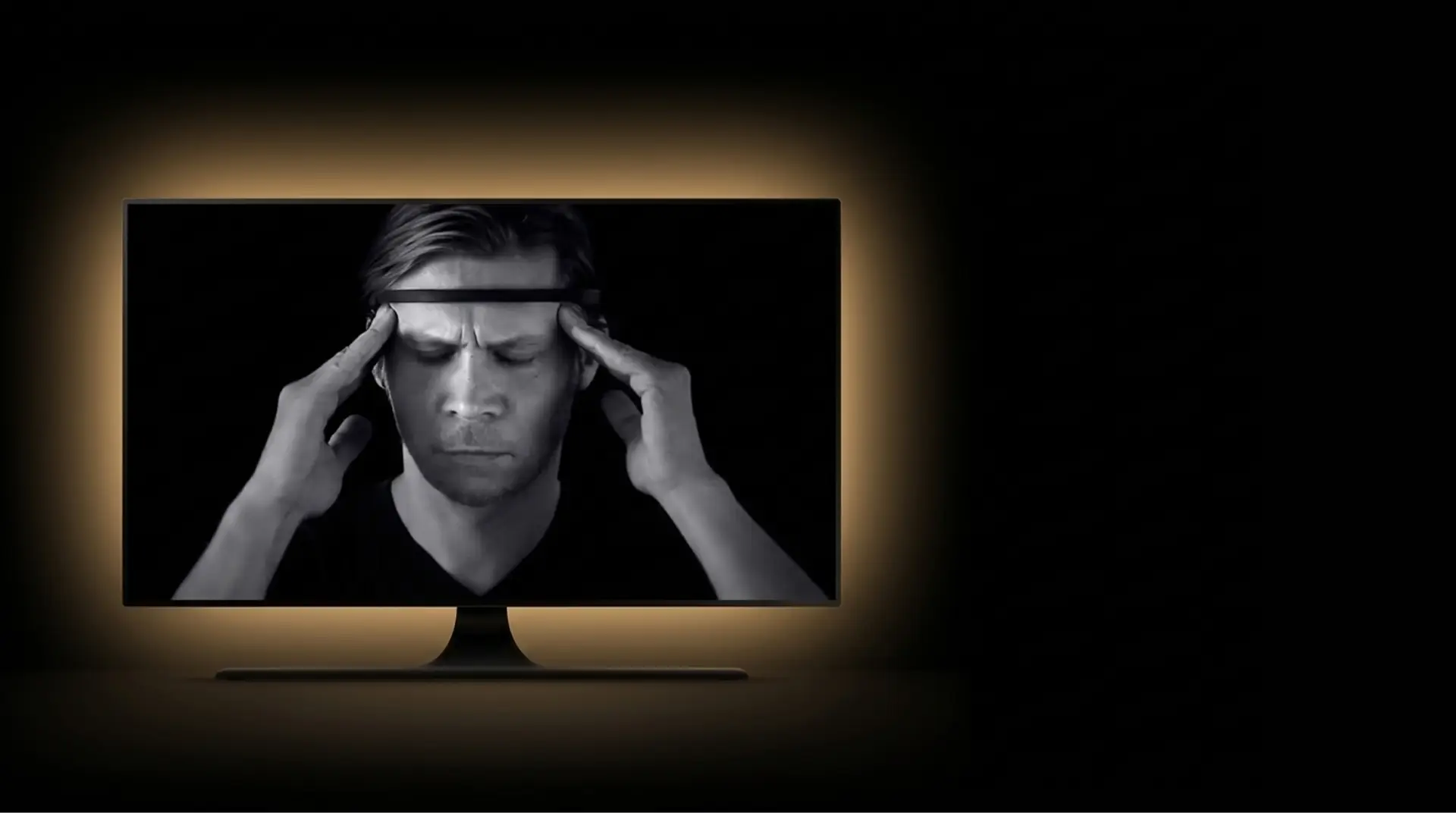
The Muse headset (4-channel EEG, Bluetooth 2.1) captures the participant's brain activity in real time via AF7, AF8, TP9 and TP10 electrodes. The signal is continuously analyzed to detect a sustained concentration state (beta band, 13-30 Hz).
Noisy signal → Filtering → Concentration threshold → Trigger
Engine start signal
As soon as the concentration threshold is reached and maintained, a Bluetooth signal is sent to the onboard system in the car. The engine starts. In real time. Without touching anything.
The human drives the machine through thought
Dual-camera video capture
Two cameras connected to a Raspberry Pi simultaneously film: the participant's face and reaction wearing the headset, and the car at the moment of ignition. Both streams are automatically synchronized.
Two angles · One moment · Perfect synchronization
Automatic editing & YouTube publishing
At the end of the session, the Raspberry Pi assembles both video streams, injects an Opel-branded intro and outro, and automatically publishes the video to YouTube - without any human intervention.
Session over → Video edited → Published on YouTube
Ready to take action?
Let's talk about your project and build together the solution that will make the difference.
Start the conversation